
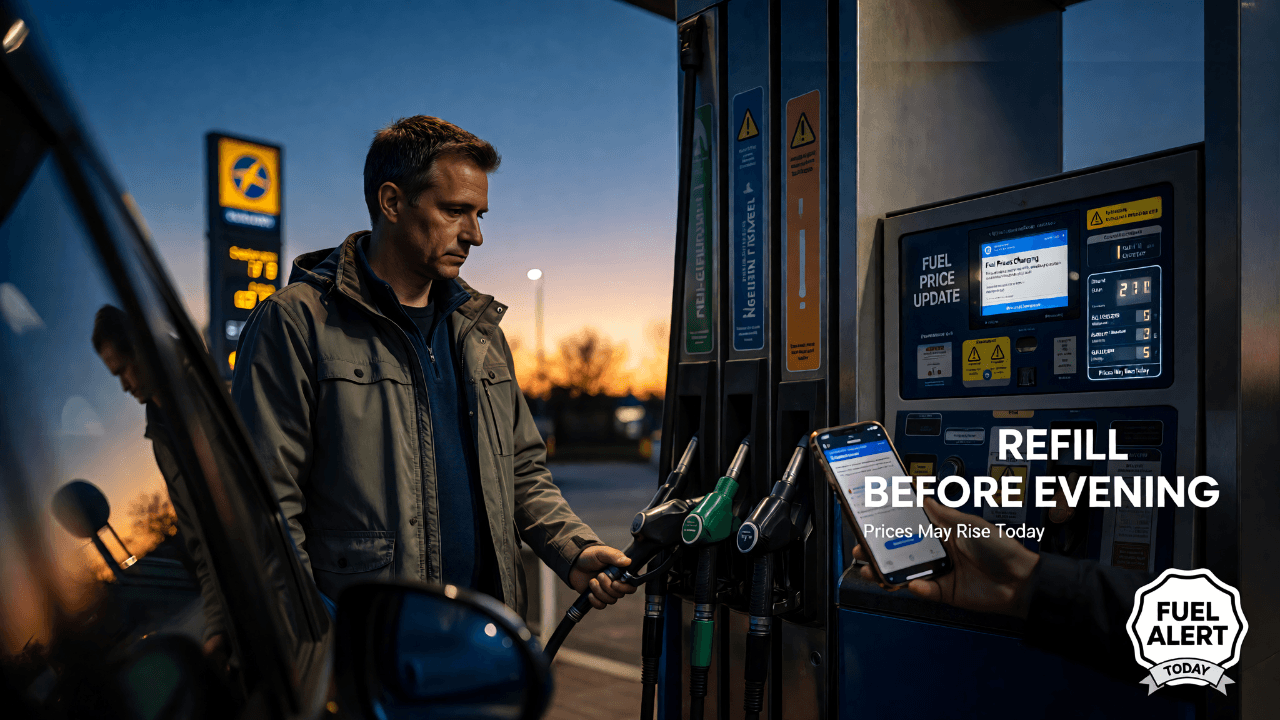

For drivers across the United Kingdom, fuel prices are something that can change quickly—and often without much warning. Whether you rely on your car for commuting, school runs or everyday errands, even small increases at the pump can make a noticeable difference over time.
That’s why recent alerts suggesting that fuel prices could rise later in the day have caught the attention of motorists. Many drivers are now being advised to consider refilling sooner rather than later to avoid potential increases.
But what’s really behind this alert, and how should you respond? Let’s take a closer look.
Why drivers are being warned
Fuel prices in the UK are influenced by a range of factors, and they don’t always change gradually. In some cases, prices can shift within hours depending on supply, demand and wholesale costs.
The current alert is based on expectations that:
Retail fuel prices may be adjusted by evening
Stations could respond to rising wholesale costs
Local pricing strategies may lead to quick changes
This doesn’t mean every petrol station will increase prices at the same time, but it does highlight the possibility of noticeable differences later in the day.
How fuel pricing works in the UK
Fuel prices are not fixed nationwide. Instead, they are set by individual retailers based on several factors.
These include:
Wholesale fuel costs
Transport and distribution expenses
Local competition between stations
Regional demand levels
Because of this, prices can vary not only between cities, but even between petrol stations on the same road.
Why prices can change during the day
Unlike some other expenses, fuel prices can change multiple times within a single day.
This can happen when:
Wholesale prices fluctuate
Stations adjust prices to match competitors
Demand increases during peak hours
Evening price changes are not uncommon, especially if there is increased demand from commuters or if suppliers update pricing.
The role of global markets
Although the alert focuses on local price changes, global factors play a big role in determining fuel costs.
These include:
Oil prices on international markets
Exchange rates
Supply disruptions
Geopolitical events
When these factors shift, the impact can filter down to UK petrol stations relatively quickly.
Should you refill now
The advice to refill before evening is based on caution rather than certainty.
If your tank is already low, filling up earlier could help you avoid potential price increases. However, if you have enough fuel, the difference may not be significant enough to make an urgent trip worthwhile.
It ultimately comes down to:
Your current fuel level
Your daily travel needs
Local price trends
How much prices could change
Fuel price changes are usually measured in pence per litre.
Even a small increase—such as 2 to 5 pence per litre—can add up over a full tank, especially for larger vehicles.
For example:
A 3p increase on a 50-litre tank could mean paying £1.50 more
Over time, these differences can accumulate
This is why timing your refill can sometimes make a difference.
Where prices may rise fastest
Not all areas experience price changes at the same rate.
Prices may rise more quickly in:
Busy urban areas
Locations with high demand
Areas with fewer competing petrol stations
On the other hand, areas with more competition may see slower or smaller increases.
Tips to save money on fuel
Even when prices fluctuate, there are ways to manage your fuel costs more effectively.
Refill earlier in the day when possible
Compare prices between nearby stations
Avoid waiting until your tank is nearly empty
Drive efficiently to reduce fuel consumption
Small changes can lead to noticeable savings over time.
The impact on everyday drivers
For many households, fuel is a regular expense that directly affects budgets.
Rising prices can:
Increase commuting costs
Affect delivery and transport expenses
Put pressure on household finances
This is why even short-term alerts about price changes attract attention.
Common misunderstandings
There are several misconceptions about fuel price alerts.
Some people believe:
Prices will rise everywhere at the same time
The increase will be significant nationwide
Waiting always results in higher costs
In reality:
Changes vary by location
Increases may be small
Prices can also stabilise or drop
Why headlines can feel urgent
Fuel-related headlines often use urgent language to encourage quick action.
Phrases like “refill now” or “prices rising tonight” are designed to grab attention, but they don’t always reflect uniform changes across the country.
Understanding this helps you make more balanced decisions.
How to stay informed
If you want to keep track of fuel prices, there are a few practical steps you can take.
Check local petrol station prices regularly
Use apps or websites that compare fuel costs
Pay attention to trends rather than single updates
This can help you make more informed choices about when to refill.
What to expect in the coming days
While short-term fluctuations are common, fuel prices can stabilise depending on market conditions.
In the coming days, prices may:
Rise slightly
Remain steady
Adjust based on competition
There is rarely a single, consistent trend across all regions.
The bigger picture
Fuel prices are part of a larger economic system that includes global markets, supply chains and consumer demand.
While individual price changes may seem small, they reflect broader trends that affect:
Transport costs
Business operations
Household budgets
Understanding this context can make price changes easier to interpret.
Key points to remember
Fuel prices can change quickly, sometimes within the same day
Evening increases are possible but not guaranteed
Prices vary by location and retailer
Small changes can add up over time
Staying informed helps you make better decisions
Final thoughts
The alert urging drivers to refill before evening price changes is a reminder of how dynamic fuel pricing can be in the UK. While not every station will increase prices at the same time, being aware of potential changes can help you avoid paying more than necessary.
If you’re running low, filling up earlier may be a sensible choice. But as always, it’s worth checking local prices and making a decision based on your own needs rather than reacting to headlines alone.
In the end, a little awareness can go a long way when it comes to managing everyday costs on the road.
