
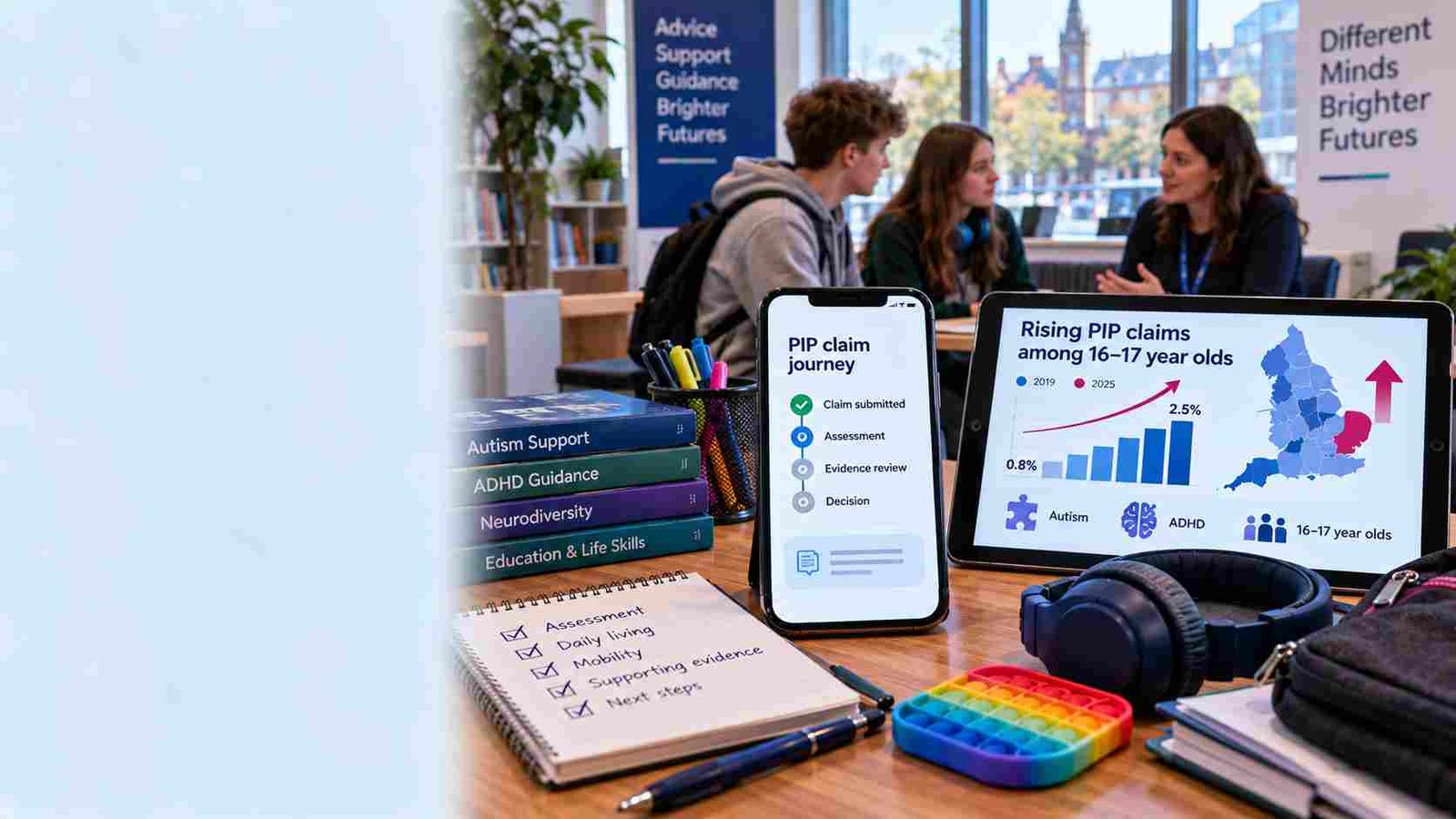

New figures suggest that Personal Independence Payment (PIP) claims made by teenagers with autism and ADHD have more than tripled in some parts of the UK, highlighting a growing demand for disability support among young people with neurodevelopmental conditions.
The latest data has sparked renewed discussion about access to assessments, waiting times and the level of support available for families. While the increase reflects rising numbers of claims, eligibility for PIP continues to depend on how a condition affects a person’s daily living and mobility rather than on a diagnosis alone.
Here’s what the figures mean.
Why Have Teen PIP Claims Increased?
Several factors may be contributing to the rise in claims, including:
- Greater awareness of autism and ADHD.
- More assessments leading to formal diagnoses.
- Increased understanding of available financial support.
- Better recognition of how neurodevelopmental conditions affect daily life.
Experts say growing awareness may encourage more eligible families to apply for support.
Who Can Claim PIP?
PIP is available to people who have a long-term health condition or disability that significantly affects their ability to carry out everyday activities or move around.
For younger claimants approaching adulthood, eligibility is based on:
- How the condition affects daily living.
- Mobility needs.
- The expected length of the condition.
- Meeting the qualifying criteria set by the DWP.
A diagnosis of autism or ADHD alone does not automatically qualify someone for PIP.
How Is Eligibility Assessed?
When assessing a PIP claim, the DWP considers how a person’s condition impacts everyday life.
This may include:
- Communicating with others.
- Managing daily tasks.
- Planning and following journeys.
- Preparing food.
- Managing medication.
- Social interaction.
Supporting evidence from healthcare professionals can help explain how a condition affects day-to-day activities.
What Do the New Figures Show?
The latest statistics indicate that in some areas, the number of teenage PIP claims linked to autism and ADHD has increased significantly compared with previous years.
However, trends vary across different regions, and not every area has experienced the same level of growth.
The figures reflect increasing applications and do not necessarily mean every claim is successful.
What Should Families Know?
Families considering a PIP claim should:
- Check the latest eligibility criteria.
- Gather supporting medical or educational evidence.
- Explain clearly how the condition affects daily life.
- Respond promptly to any requests from the DWP.
Providing detailed and accurate information can help ensure claims are assessed fairly.
Why the Increase Matters
The rise in teenage claims has prompted wider debate about the support available for young people with autism and ADHD.
Many organisations have highlighted the importance of timely assessments, appropriate services and financial assistance for families facing additional care and support costs.
Final Thoughts
The sharp increase in teen PIP claims for autism and ADHD highlights growing awareness of disability support and the challenges many young people face. While the latest figures show claims have risen significantly in some areas, entitlement to PIP continues to depend on individual needs and the impact of a condition on daily life.
Families who believe they may be eligible should review the current rules, gather relevant evidence and rely on official DWP guidance when making a claim.
