

For millions of workers across the United Kingdom, the personal tax threshold plays a crucial role in determining how much of their income they get to keep. It’s one of those figures that quietly shapes everyday finances—yet when it changes, or even when discussions around it intensify, it quickly becomes a major talking point.
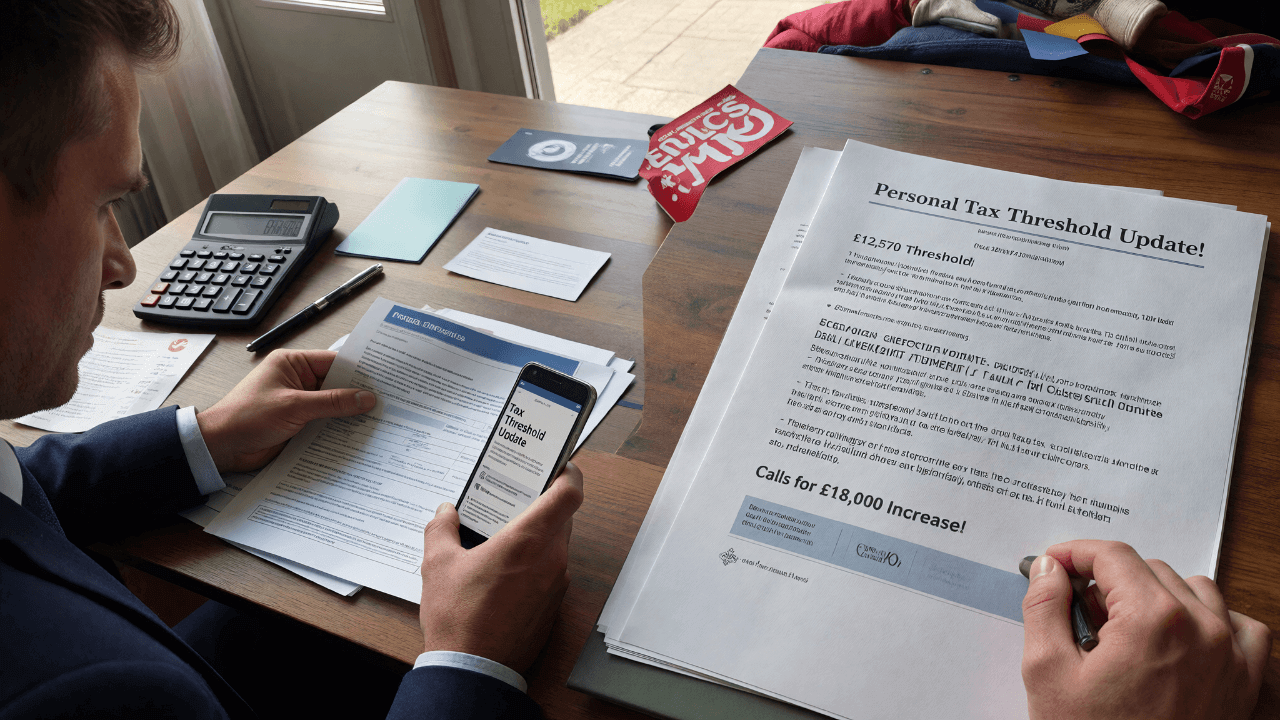
Recently, attention has turned once again to the £12,570 personal allowance, with growing calls for it to be increased to £18,000. For many households facing rising living costs, this potential change could make a significant difference.
But what exactly is the personal tax threshold? Why are people calling for an increase? And is any change actually happening?
Let’s break it all down in a clear and practical way.
What the personal tax threshold is
The personal tax threshold—often referred to as the personal allowance—is the amount of income you can earn before you start paying income tax.
In the UK, this threshold is currently set at £12,570. This means:
You do not pay income tax on earnings up to this amount
Any income above this is taxed according to the relevant tax bands
The system is managed by HM Revenue and Customs, which oversees taxation across the country.
Why £12,570 is important
At first glance, the figure might seem like just another number. But in reality, it has a direct impact on take-home pay.
For example:
If the threshold is higher, you keep more of your income
If it stays the same while wages rise, more of your income becomes taxable
This is why the personal allowance is such a key part of financial planning for individuals and families.
Why calls for an £18,000 threshold are growing
In recent months, there has been increasing discussion about raising the threshold from £12,570 to £18,000.
Supporters of this idea argue that:
Living costs have risen significantly
Wages have not kept pace with inflation for many people
More income should be tax-free to ease financial pressure
For many households, especially those on lower or moderate incomes, this could provide meaningful relief.
The impact of rising living costs
One of the main reasons behind these calls is the continued rise in the cost of living.
Households are facing higher:
Energy bills
Food prices
Housing costs
Transport expenses
As a result, even small increases in disposable income—such as paying less tax—can make a noticeable difference.
What an increase to £18,000 could mean
If the personal allowance were increased to £18,000, it could have several effects.
For workers, it would mean:
More income kept tax-free
Lower overall tax bills
Increased monthly take-home pay
For example, someone earning £25,000 would pay tax on a smaller portion of their income compared to the current system.
Would everyone benefit equally
While an increase sounds beneficial, the impact would vary.
Those on lower incomes would see the biggest proportional benefit, as a larger share of their income would remain tax-free.
Higher earners would also benefit, but the relative impact would be smaller compared to their overall income.
Why the threshold has not increased yet
Despite ongoing discussions, the personal allowance has remained at £12,570.
There are several reasons for this.
One key factor is government revenue. Income tax is a major source of funding for:
Public services
Healthcare
Education
Infrastructure
Raising the threshold significantly would reduce tax revenue, which could affect public spending.
The concept of “fiscal drag”
Even without raising tax rates, keeping the threshold unchanged can increase the amount of tax people pay over time.
This is known as “fiscal drag.”
As wages rise:
More people move into taxable income brackets
A larger portion of income becomes taxable
This effectively increases tax revenue without changing the headline rates.
How this affects everyday workers
For many workers, the impact of a frozen threshold is gradual but noticeable.
Over time, it can mean:
Higher tax bills
Reduced real income
Less financial flexibility
This is one of the reasons why calls for change are gaining momentum.
Is a change to £18,000 likely
At present, there is no confirmed plan to increase the personal allowance to £18,000.
While the idea is being discussed, any change would require:
Government approval
Budget announcements
Economic justification
This means that, for now, the £12,570 threshold remains in place.
What to watch for in future updates
Tax policies are often reviewed during key financial events, such as:
The Autumn Budget
Spring statements
Fiscal policy announcements
These are the moments when any potential changes are most likely to be introduced.
How this links to overall tax policy
The personal allowance is just one part of the broader tax system.
Other factors include:
Tax bands and rates
National Insurance contributions
Allowances and reliefs
Changes to any of these can affect overall take-home pay.
What individuals can do now
While waiting for any potential changes, there are steps you can take to manage your finances.
Check your tax code
Review your payslip regularly
Understand your tax band
Plan your budget based on current income
Being informed can help you make better financial decisions.
Common misunderstandings
There are several misconceptions around this topic.
Some people believe:
The threshold has already increased
Everyone will automatically pay less tax soon
Changes are guaranteed
In reality:
The threshold remains at £12,570
No increase to £18,000 has been confirmed
Any changes would be announced officially
Why headlines can be misleading
Headlines often focus on proposals or discussions rather than confirmed policy.
Phrases like “calls grow” or “update expected” can create the impression that a change is already happening.
It’s important to distinguish between:
Proposals
Debates
Official decisions
How this affects households
For many families, even small financial changes can have a real impact.
An increased threshold could help:
Improve household budgets
Reduce financial stress
Provide more disposable income
But until any changes are confirmed, current tax rules continue to apply.
The bigger economic picture
Tax decisions are closely linked to the wider economy.
Factors influencing policy include:
Inflation rates
Economic growth
Government spending needs
Balancing these factors is key to any decision about changing the personal allowance.
Looking ahead
The debate around the personal tax threshold is unlikely to disappear.
As living costs continue to evolve, there may be:
Further discussions
Policy proposals
Potential adjustments in future budgets
However, any change would be carefully considered and introduced gradually.
Key points to remember
The personal allowance is currently £12,570
Calls are growing to increase it to £18,000
No official change has been confirmed
Raising the threshold could increase take-home pay
Government decisions depend on wider economic factors
Final thoughts
The discussion around raising the personal tax threshold from £12,570 to £18,000 highlights the financial pressures many households are facing today. While the idea offers clear benefits in terms of increased take-home pay, it also comes with wider economic considerations.
For now, the current threshold remains unchanged. But as debates continue and economic conditions evolve, it’s a topic worth keeping a close eye on.
Staying informed and understanding how these changes could affect you is the best way to stay prepared—whatever the future may bring.
